Spiro Gear
Choosing the right Micro Motor supplier can shape product performance, production stability, and long-term service costs. In 2026, global buyers face more options, but also more technical uncertainty. A supplier may offer impressive specifications while lacking consistent quality control. That gap matters.
This guide examines leading Micro Motor suppliers through practical purchasing criteria. These include torque output, operating voltage, noise levels, brush life, gear accuracy, and thermal performance. It also considers certifications, production capacity, sample support, and communication quality. Experienced buyers often request test reports, inspect assembly details, and compare performance under real operating loads. A motor that works on a laboratory bench may behave differently inside a medical device, camera module, smart lock, or miniature pump.
Reliability requires evidence. Suppliers should explain material choices, inspection procedures, traceability systems, and failure-handling processes. Their answers should be specific, not merely promotional. Delivery records and after-sales support also deserve attention, especially for buyers managing international supply chains. No supplier is perfect. Even established manufacturers may struggle with customization, changing component costs, or urgent volume increases. That is worth remembering.
The following overview is designed for engineers, procurement teams, distributors, and product developers. It combines technical judgment with practical sourcing experience. Ratings and recommendations should still be verified against your application, target market, and compliance requirements. A careful supplier review can reduce redesign risks and support more predictable production in 2026.
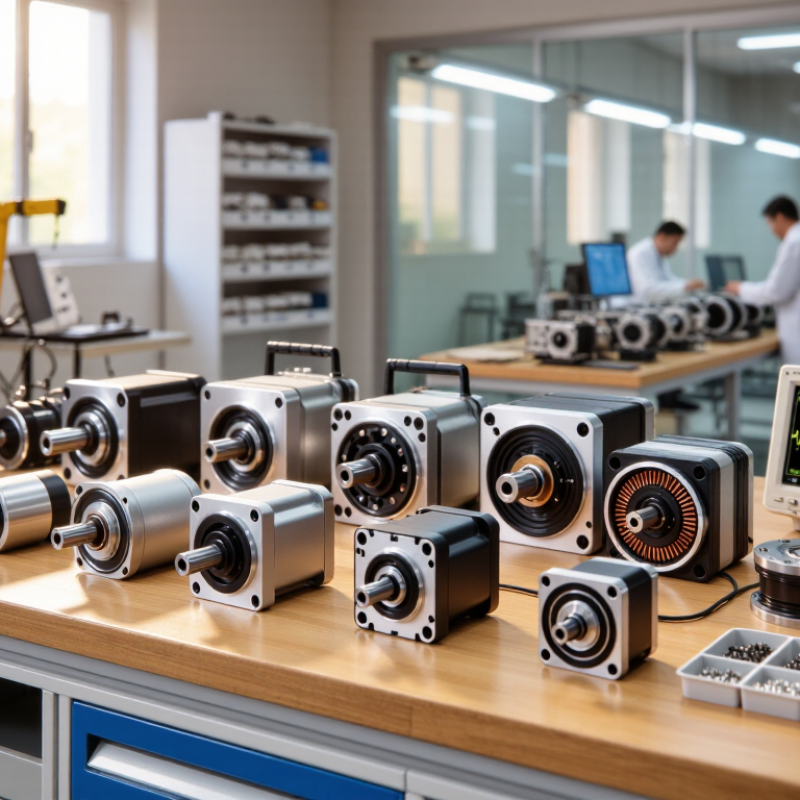
Micro motors are compact electric motors designed to create controlled rotation in limited spaces. They often power miniature pumps, medical instruments, camera systems, toys, valves, and automated devices. Their small size does not make them simple. A motor with a shaft only a few millimeters wide can still face heat, vibration, noise, and heavy starting loads.
Global buyers need reliable suppliers because performance depends on more than catalog speed. During practical testing, engineers should check torque under real load, current consumption, operating temperature, vibration, and sound. A motor may run smoothly without load, then stall inside a tight mechanism. That detail is easy to miss. Suppliers should provide clear drawings, tolerance data, test records, and traceable production information. They should also explain winding options, gearbox ratios, shaft materials, and expected service life.
Communication matters when orders cross borders. A capable supplier confirms voltage requirements, sample changes, packaging details, and realistic production schedules. Consistent inspection is important, especially for large batches with narrow size tolerances. I have found that early samples can look excellent, yet later discussions reveal unclear quality controls. No supplier is perfect. Buyers should ask difficult questions and request repeat testing before committing to volume. Responsive technical support can prevent a small motor problem from becoming a costly redesign.
Key Types of Micro Motors and Their Main Industrial Applications
Micro motors convert compact electrical input into precise motion. Common types include brushed DC, brushless DC, AC, stepper, and servo motors. Brushed DC motors suit small fans, pumps, toys, and automotive actuators. They offer low initial cost, but brush wear limits service life. Brushless designs reduce friction and support continuous operation in medical devices, drones, and factory equipment.
Stepper motors move in controlled increments. They are useful in printers, laboratory instruments, valve systems, and CNC equipment. Servo motors provide feedback-based positioning for robotic joints and automated assembly lines. AC micro motors remain practical for ventilation, appliances, and light industrial machinery. The boundary is not always clean. A compact application may require both speed and positioning accuracy.
MarketsandMarkets estimated the global micro motor market at about USD 40.7 billion in 2023. Its report projected approximately USD 55.8 billion by 2028, reflecting a 6.5% compound annual growth rate. Grand View Research also reported strong growth through 2030, driven by automotive electronics, healthcare equipment, and industrial automation. These figures are useful, but market definitions differ between reports. Buyers should verify torque, voltage, noise, thermal limits, duty cycle, and ingress protection before comparing suppliers. A motor that fits a drawing may still fail beside a hot conveyor or under repeated start-stop loads. Performance data deserves more attention than catalogue size.
For global buyers, evaluating a micro motor supplier requires more than comparing unit prices. The IEA’s Energy Efficiency Market Report 2016 estimates that electric motor systems consume about 53% of global electricity. Efficiency, thermal stability, and service life therefore affect operating costs significantly.
Request measured torque-speed curves, no-load current, stall torque, noise, vibration, and temperature-rise data. Ask whether results come from production samples or laboratory prototypes. A supplier should provide material certificates, process controls, calibration records, and batch traceability. IEC 60034 testing references can help establish a consistent technical baseline. Small details matter. A 0.2 mm shaft error may create serious assembly problems.
Cost analysis should include tooling, inspection, packaging, shipping, warranty handling, and failure replacement. The lowest quotation can become expensive after field returns. Capacity also needs evidence. Review monthly output, equipment utilization, staffing, maintenance schedules, and backup production lines. The supplier should explain its response to demand spikes, not simply promise flexibility. The World Bank’s Logistics Performance Index 2023 highlights major differences in global shipment reliability, so lead-time history deserves careful review. Ask for twelve months of delivery records.
A practical audit should compare claimed capacity with actual production records. This can be uncomfortable. Forecasts are often optimistic. Use pilot orders, staged approvals, and clear acceptance criteria before scaling. Evaluate communication quality too; delayed technical answers often signal future project friction. Suppliers should welcome corrective-action reviews rather than hide weak data.
Choosing a micro motor supplier requires more than comparing catalog prices. Regional manufacturing strengths differ sharply. The International Energy Agency reports that electric motor systems consume about 45% of global electricity. That figure explains why efficiency, heat control, and service life matter in compact designs.
East Asia remains a major production center for high-volume micro motors. China offers deep component networks, automated winding lines, and flexible tooling for consumer devices and automotive actuators. Japan is stronger in miniature precision, low vibration, and strict process control. Taiwan combines electronics expertise with efficient small-batch customization. According to UNIDO’s 2024 industrial statistics, East Asian economies continue to hold substantial shares of global manufacturing value added.
Europe is often preferred for engineered applications. Germany and nearby manufacturing regions provide strong capabilities in robotics, medical equipment, and industrial motion systems. Suppliers there commonly emphasize traceability, acoustic testing, and long-term reliability. North America adds value through application engineering, rapid prototyping, and compliance support, although production costs can be higher. MarketsandMarkets’ 2024 analysis identifies automation, automotive systems, and medical equipment as important growth areas for micro motors.
Real-world sourcing is less tidy. A low quotation may hide tooling charges, longer validation, or limited after-sales support. A technically excellent supplier may also struggle with urgent volume changes. Buyers should inspect winding samples, test reports, bearing quality, and failure data before approving production. Country reputation helps, but factory evidence matters more.
Comparative regional benchmark of micro motor manufacturing strengths. Scores use a 1–5 scale and reflect production scale, precision capability, automation maturity, and export infrastructure.
East Asia leads in production scale and supply-chain depth, while Japan and Germany are especially strong in precision engineering and quality control. North America remains competitive in specialized, high-performance applications. The benchmark is aligned with regional patterns reported in international trade statistics for small electric motors, industrial automation indicators, and established manufacturing capabilities.
2026 Best Micro Motor Suppliers for Global Buyers
Global purchasing starts with a clear technical brief. Define voltage, torque, speed, noise, duty cycle, shaft size, and operating temperature. A supplier may quote quickly, yet miss one critical requirement. Ask for drawings, tolerance tables, test records, and production samples. Small details matter. A motor that fits the housing may still overheat after continuous operation.
Compliance needs evidence, not promises. Request material declarations, safety documentation, and applicable test reports for each target market. Check whether documents match the exact motor model and revision. Confirm packaging labels, traceability codes, and shipping records before payment. Requirements can differ across regions. Local review is still necessary.
Customization often includes winding changes, gear ratios, connectors, shafts, or mounting holes. Send a controlled drawing with revision numbers. Approve a sample before tooling or mass production. Compare suppliers through a matrix covering quality controls, lead time, engineering support, communication, and corrective action speed. A factory visit or independent audit can reveal process gaps. Remote evidence helps, but it is not perfect. I would keep a pilot order, even when the quotation looks attractive. Supplier selection should balance cost with repeatable performance, documented compliance, and realistic after-sales support.
| Supplier Profile | Typical Production Region | Micro Motor Technology | Typical Rated Voltage | Typical Output / Torque Range | Customization Capability | Typical MOQ | Sample Lead Time | Mass-Production Lead Time | Expected Quality Documents | Global Compliance Requirements | Best-Fit Applications | Key Selection Check |
|---|---|---|---|---|---|---|---|---|---|---|---|---|
| Profile A – High-Volume DC Motor Specialist | East and Southeast Asia | Brushed DCCoreless DC | 1.5–24 V DC | 0.001–0.20 N·m; approximately 3,000–30,000 rpm | Custom shaft, winding, magnet, connector, bearing, gearhead, and end-cap design | 1,000–5,000 pieces, depending on design maturity | 3–6 weeks | 6–12 weeks after design approval | Dimensional report, performance curve, incoming-material records, process inspection data, and final inspection report | RoHS and REACH declarations; CE-related technical file where applicable; transport documentation for products containing restricted materials | Portable devices, small pumps, valves, toys, personal-care equipment, and compact actuators | Verify brush life, commutator quality, noise level, stall-current tolerance, and consistency across production lots |
| Profile B – Precision Brushless Motor Supplier | East Asia and Central Europe | BLDCSensorless BLDC | 5–48 V DC | 0.005–1.00 N·m; approximately 2,000–50,000 rpm | Custom stator, rotor, Hall-sensor layout, winding, driver interface, and firmware parameters | 300–1,500 pieces for qualified programs | 4–8 weeks | 8–16 weeks | Back-EMF data, efficiency map, vibration report, balancing record, electrical safety test, and endurance results | RoHS, REACH, EMC evaluation, and applicable low-voltage or machinery requirements based on the complete assembly | Cooling fans, medical instruments, laboratory equipment, robotics, optical systems, and precision pumps | Confirm controller compatibility, commutation timing, electromagnetic noise, rotor balance, and thermal derating |
| Profile C – Geared Micro Motor Manufacturer | East and Southeast Asia | DC Gear MotorPlanetary GearboxWorm Gearbox | 3–24 V DC | 0.02–8.00 N·m after gearing; approximately 5–1,500 rpm | Custom gear ratio, gearbox housing, output shaft, encoder, mounting pattern, and lubrication specification | 500–2,000 pieces | 4–7 weeks | 8–14 weeks | Gear backlash report, no-load/current test, stall-torque test, gear-material declaration, noise report, and life-test data | RoHS and REACH declarations; product-level EMC and safety assessment when integrated into powered equipment | Locks, blinds, small valves, smart appliances, positioning mechanisms, and compact automation | Compare rated torque, peak torque, backlash, duty cycle, gearbox efficiency, shaft load, and service-life assumptions |
| Profile D – Medical and Laboratory Motion Supplier | Western Europe, Central Europe, and East Asia | Low-Noise DCBLDCStepper | 5–48 V DC | 0.003–2.50 N·m; application-specific speed control | Cleanable housings, low-particle materials, sterile-process compatibility, encoder integration, and traceable production lots | 100–500 pieces for development; negotiated for regulated programs | 6–10 weeks | 10–20 weeks | Material certificates, lot traceability, calibration records, risk-management support, process validation, and endurance testing | RoHS, REACH, applicable electrical safety and EMC standards, and customer-specific medical-device quality requirements | Diagnostic equipment, infusion-related mechanisms, sample handling, dental equipment, and laboratory automation | Assess cleanliness controls, traceability, change-control procedures, noise/vibration limits, and supplier quality agreements |
| Profile E – Automotive and Mobility Component Supplier | Europe, North America, East Asia, and Southeast Asia | Automotive DCBLDCActuator Motor | 9–16 V DC typical; other voltages available | 0.02–10.00 N·m; application-specific transient loads | Customized environmental sealing, terminals, magnets, bearings, control electronics, and end-of-line testing | 1,000–10,000 pieces after validation | 8–14 weeks | 12–24 weeks | Capability study, process flow, control plan, failure-mode analysis, production-part approval records, and environmental test results | RoHS, REACH, EMC, vibration, thermal-cycle, humidity, and customer-specific automotive quality requirements | Seat adjustment, HVAC flaps, pumps, latches, thermal management, and mobility equipment | Check temperature range, ingress protection, vibration resistance, transient-voltage behavior, and traceability depth |
| Profile F – Compact Stepper Motor Supplier | East Asia and Central Europe | 2-Phase StepperGeared Stepper | 5–36 V DC | 0.005–1.50 N·m holding torque; typically 0.5–2.0° step angle | Custom winding, step angle, shaft, connector, gearbox, encoder, and mounting arrangement | 300–2,000 pieces | 4–8 weeks | 8–16 weeks | Holding-torque test, phase-resistance report, insulation test, temperature-rise data, dimensional inspection, and noise evaluation | RoHS and REACH declarations; EMC and electrical safety evaluation for the finished equipment | Printers, instrument panels, dosing systems, camera mechanisms, and small positioning stages | Validate resonance behavior, torque margin, driver compatibility, thermal rise, missed-step risk, and gearbox backlash |
| Profile G – Low-Cost Standardized Motor Producer | South Asia, Southeast Asia, and East Asia | Standard Brushed DCFan Motor | 3–24 V DC | 0.001–0.10 N·m; approximately 2,000–20,000 rpm | Limited customization; normally supports shaft length, lead wire, connector, label, and simple mounting changes | 2,000–20,000 pieces | 2–5 weeks for standard samples | 5–10 weeks | Basic specification sheet, sample inspection report, voltage/current test, speed test, and packaging inspection | Request current RoHS and REACH declarations; confirm destination-market labeling and importer responsibilities | Consumer products, educational devices, low-cost fans, simple pumps, and promotional equipment | Do not compare price alone; verify brush life, current draw, noise, packaging protection, and lot-to-lot variation |
| Profile H – Engineering-Led Custom Motor House | North America, Europe, and East Asia | Custom DCBLDCActuator Module | 1.5–60 V DC | Application-specific; commonly 0.001–15.00 N·m | Full co-engineering, simulation, prototype tooling, electronics integration, test-fixture development, and design-for-manufacturing support | 50–500 pieces for prototypes; production MOQ is project-dependent | 8–16 weeks | 14–30 weeks | Design verification plan, tolerance analysis, test protocol, reliability data, engineering-change records, and complete validation report | Compliance plan based on destination market, end product, operating environment, and electrical architecture | Industrial instruments, robotics, aerospace-support equipment, specialized pumps, and low-volume automation | Review intellectual-property ownership, design-change approval, testing responsibility, tooling ownership, and long-term service support |
Micro motors create controlled rotation in tight spaces. They can power pumps, medical instruments, cameras, valves, toys, and automated equipment.
A motor may run smoothly without load, then stall inside a compact mechanism. Test torque under real load, current, heat, vibration, and sound. No-load tests mislead.
Request drawings, tolerance data, test records, material details, and traceable production information. Winding choices, gearbox ratios, shaft materials, and service life should be explained clearly.
Ask whether test results come from production samples or laboratory prototypes. Review calibration records, process controls, inspection methods, and batch traceability. Weak answers deserve another test.
Include tooling, inspection, packaging, shipping, warranty handling, and replacement costs. The lowest quotation may become expensive after field failures.
Review monthly output, equipment use, staffing, maintenance, and backup production lines. Compare claimed capacity with actual records. Promises are not evidence.
Ask for twelve months of delivery history and explanations for delays. Confirm voltage, sample changes, packaging, and production schedules before approving volume. Small misunderstandings can become costly.
East Asia often supports high-volume production, flexible tooling, and compact electronics. Japan is known for precision and low vibration. European suppliers may suit engineered motion systems, while North America often supports prototyping and application engineering.
Country reputation can guide research, but factory evidence matters more. Inspect winding samples, bearing quality, test reports, and failure data. I would not approve production from reputation alone.
This guide to the 2026 best Micro Motor suppliers helps global buyers understand how these compact, efficient devices support automation, medical equipment, consumer electronics, automotive systems, robotics, and other industries. It explains the main motor types, including brushed, brushless, geared, stepper, and coreless designs, while highlighting how each option suits different requirements for torque, speed, precision, noise, size, and operating life.
The article also presents practical methods for evaluating suppliers, focusing on product quality, testing procedures, production capacity, cost control, lead times, engineering support, and quality management. It compares major manufacturing regions by their strengths in technology, component supply, customization, and large-scale production. Finally, it outlines key steps for global purchasing, including defining technical specifications, checking compliance documentation, reviewing samples, confirming customization capabilities, assessing communication and logistics, and selecting a reliable long-term partner based on total value rather than price alone.
