 Spiro Gear
Spiro Gear
Spiro Gear
Choosing the right Miniature Motor begins with understanding the product, not browsing a catalogue. A medical pump, camera lens, wearable device, and miniature robot demand different motion behaviors. Each application has its own limits: available space, starting torque, speed, noise, heat, power consumption, and expected service life. A motor that performs beautifully on a test bench may struggle inside a sealed enclosure.
As motion-control engineer Peter Roth once advised, “A motor should be selected as part of the mechanism, not as an isolated component.” This principle remains practical. Measure the real load, including friction, acceleration, gear losses, and sudden resistance. Do not rely only on the motor’s peak torque. Continuous torque often matters more during long operating cycles. Tiny details matter. A 2-millimeter shaft misalignment can create vibration, noise, and premature wear.
The selection process should also examine voltage stability, controller compatibility, feedback requirements, and operating temperature. Brushed, brushless, stepper, and coreless designs each offer useful advantages, but none is perfect. Brushless motors may improve service life, while brushed motors can simplify control and reduce initial cost. That trade-off deserves careful testing.
A thoughtful prototype can reveal uncomfortable facts. The quietest motor may be too weak. The smallest motor may overheat. The most efficient option may exceed the budget. Engineers should record these failures, question early assumptions, and test the Miniature Motor under actual working conditions before finalizing the product.
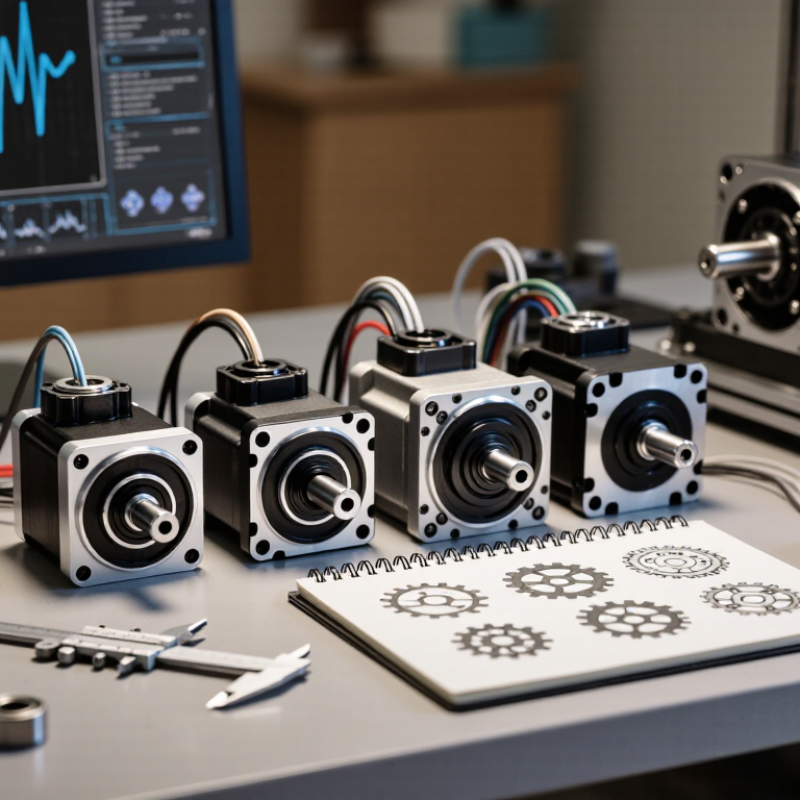
How to Choose the Right Miniature Motor for Your Product?
Define the Product’s Motion and Performance Requirements
Choosing a miniature motor starts with the product’s actual movement. Describe what must move, how far, and how quickly. A rotating hinge needs different performance than a small pump or precision slider.
Write the motion as measurable data. Specify speed in revolutions per minute, travel distance, acceleration, and operating time. Record the load, friction, and expected starting force. Do not guess.
Small details matter. A motor may reach the required speed without producing enough torque at startup. A geared motor may increase torque, but it can also reduce speed and introduce backlash. If the mechanism must stop within a precise position, consider feedback and braking requirements.
Think about the complete duty cycle. Will the motor run continuously, or move for three seconds every minute? Repeated starts can create more heat than steady operation. Measure the available voltage and current, then leave realistic electrical and thermal margins.
Noise can also affect the choice. A compact motor that sounds acceptable in a factory may seem loud in a handheld product. Vibration, dust, moisture, and limited installation space require equal attention. The motor’s dimensions should include connectors, wiring, and moving parts.
A practical design review should test the motor under real load, not only on a workbench. This is where weak assumptions appear. The first specification is rarely perfect. Recheck it after testing temperature, sound, speed stability, and position accuracy.
| Product Motion Profile | Typical Application | Required Motion | Typical Speed Range | Typical Torque / Force | Duty Cycle | Recommended Motor Characteristics | Key Selection Checks |
|---|---|---|---|---|---|---|---|
| Fast continuous rotation | Small fans, pumps, scanners, compact drives | Steady rotary motion with limited speed variation | 3,000–20,000 rpm | 0.2–30 mN·m | Continuous or greater than 30 minutes per hour | High-speed brushed or brushless motor; efficient bearings; suitable thermal design | Check operating temperature, bearing life, acoustic noise, speed regulation, and airflow or load resistance |
| Low-speed high-torque rotation | Valves, miniature gearboxes, latches, positioning mechanisms | Controlled rotation at low output speed | 10–500 rpm at the output shaft | 10–500 mN·m | Intermittent; typically 1–60 seconds per cycle | Motor combined with a gearhead; adequate stall-torque margin; low backlash when positioning is important | Calculate reflected inertia, starting torque, gear efficiency, holding load, and allowable backlash |
| Precise angular positioning | Optical modules, laboratory instruments, camera mechanisms | Move to defined angles and repeat the position accurately | 10–3,000 rpm | 1–200 mN·m | Intermittent or repeated indexing | Stepper or servo motor with encoder feedback; low backlash transmission; controllable acceleration | Define accuracy, repeatability, settling time, encoder resolution, load inertia, and missed-step protection |
| Short linear travel | Focus adjustment, miniature slides, dispensing systems | Convert rotary motion into controlled linear displacement | 0.1–100 mm/s | 0.1–50 N linear force | Intermittent; cycle-dependent | Motor with lead screw, ball screw, or belt drive; limit detection; suitable linear guides | Verify screw pitch, efficiency, self-locking behavior, axial load, travel length, and end-of-travel protection |
| Repeated reciprocating motion | Miniature actuators, grippers, dosing and switching mechanisms | Move forward and backward between two or more positions | 5–300 cycles per minute | 0.5–30 N linear force | 10%–50% operating time, depending on load and stroke | Reversible motor or servo system; robust commutation; controlled acceleration and deceleration | Assess stroke, cycle rate, reversal frequency, impact at endpoints, mechanical wear, and peak current |
| Momentary actuation | Locks, vents, small doors, release mechanisms | Complete one short movement and remain idle | 5–300 rpm at the motor shaft | 20–500 mN·m or 1–20 N linear force | Less than 10% operating time | Compact gearmotor or actuator with sufficient peak torque and reliable end-stop control | Confirm startup torque, mechanical stops, current limits, noise, idle power, and required service life |
| Quiet low-vibration motion | Wearable devices, medical instruments, office equipment | Smooth movement with minimal audible and structural vibration | 100–6,000 rpm | 1–100 mN·m | Continuous or frequent intermittent operation | Balanced rotor; low-cogging brushless motor; precision bearings; soft-start control | Set measurable noise and vibration limits, then test the complete assembly rather than the motor alone |
| Battery-powered operation | Portable tools, handheld devices, mobile sensors | Perform required motion while minimizing energy consumption | 100–15,000 rpm | 0.5–150 mN·m | Usually intermittent, with defined rest periods | High-efficiency motor matched to the battery voltage; low no-load current; efficient gearing | Compare energy per cycle, voltage range, peak current, thermal rise, battery capacity, and control losses |
Note: The values above are representative engineering ranges for initial motor selection. Final sizing should use the actual load, acceleration profile, transmission efficiency, environmental conditions, and required service life.
Describe the movement, distance, speed, acceleration, load, friction, and operating time. Use measurable values, not guesses. Start there.
A motor may reach its rated speed but fail during startup. Check starting force, friction, and acceleration under the real load.
Use gears when higher output torque is needed at lower speed. Remember, gears can add noise, friction, weight, and backlash.
Record how long the motor runs and rests. Three seconds every minute can create significant heat through repeated starts.
A stepper motor can provide controlled positioning. However, it may consume energy while holding position and can lose movement under excessive load.
Check dust, humidity, temperature, vibration, airflow, and available space. A motor tested indoors may struggle inside a sealed product.
Test it inside the finished enclosure with the actual load. Measure temperature, noise, speed stability, voltage drops, vibration, and position accuracy.
Leave a practical torque and thermal margin. Excessive oversizing can increase weight, noise, and battery consumption. More power is not always better.
Relying only on rated torque can cause failure. A prototype may stall during cold starts or repeated cycles. Recheck assumptions after testing.
Choosing the right Miniature Motor begins with clearly defining your product’s required motion, speed, torque, duty cycle, noise level, and operating environment. Consider whether the application needs continuous rotation, precise positioning, rapid acceleration, or controlled movement. These requirements will help determine the most suitable motor type and ensure reliable performance under expected temperature, load, vibration, and space limitations.
Next, evaluate the motor’s dimensions, power consumption, efficiency, materials, durability, and compatibility with the available control system. A practical choice should balance performance, service life, cost, and potential customization needs, including shaft design, wiring, mounting, and gear reduction. Before final selection, test the Miniature Motor under real operating conditions to confirm its torque, temperature, noise, energy use, and control response. Integrating the motor into the complete product can reveal mechanical or electrical issues early, allowing adjustments that improve reliability, efficiency, and overall user experience.
