Spiro Gear
Choosing the right stepper motor for your project can significantly impact performance and efficiency. In recent years, the stepper motor market has been growing, projected to reach $5.56 billion by 2026, according to industry reports. This growth highlights the increasing demand for precise control in applications ranging from automation to robotics.
Understanding the types of stepper motors is essential. There are permanent magnet, variable reluctance, and hybrid stepper motors, each suited for specific tasks. For example, hybrid stepper motors offer superior torque and accuracy, making them ideal for demanding applications. However, selecting the wrong type can lead to inefficiency and increased costs.
Expertise in stepper motor selection goes beyond basic specifications. Factors such as torque requirements, load conditions, and step angle must be considered. Ignoring these details can result in project delays or suboptimal performance. A thorough analysis is crucial, as even slight inaccuracies in motor choice can lead to significant operational challenges.
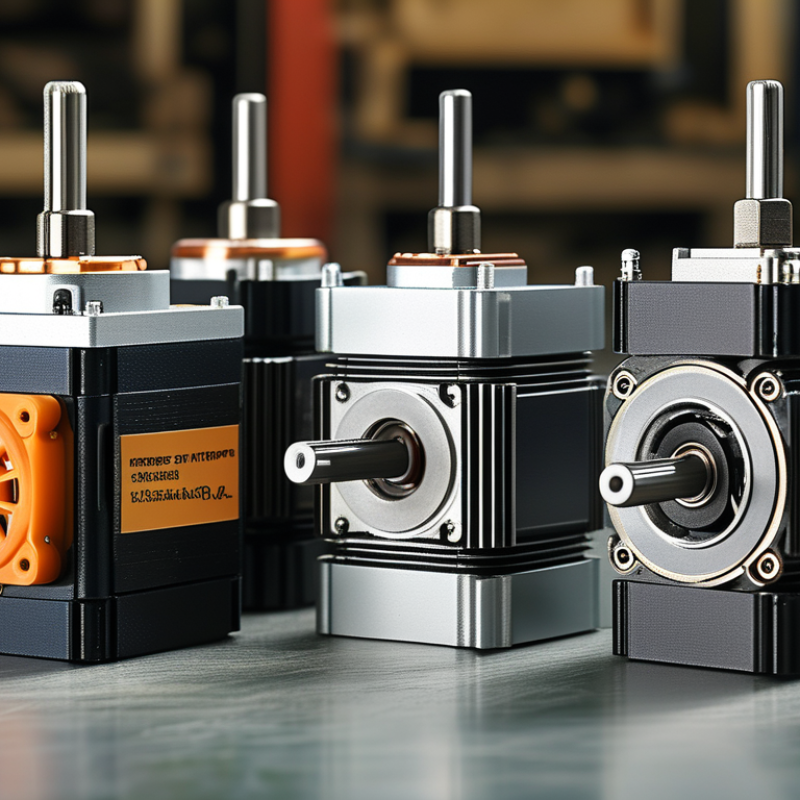
Stepper motors are versatile devices commonly used in robotics, CNC machines, and 3D printers. Understanding how they work is crucial for any project. A stepper motor moves in discrete steps, providing precise control over position and speed. This feature is vital in applications that require accurate movements.
Different types of stepper motors exist, like permanent magnet and hybrid stepper motors, each serving unique purposes. Projects demanding high torque and precision may benefit from hybrid stepper motors. On the other hand, permanent magnet stepper motors might be more suitable for simpler tasks. Knowing the specific needs of your project is fundamental.
When choosing a stepper motor, consider torque requirements, voltage ratings, and step angles. Often, users overlook how these factors affect performance. An underpowered motor can stall and lead to inaccuracies. Similarly, over-engineering can increase costs without additional benefits. It’s a balancing act that requires careful thought and adjustments.
When selecting a stepper motor, defining your project requirements is critical. Consider the load your motor will handle. A significant load will demand a more powerful motor. For instance, data indicates that motors must handle 1.5 times the load for safety and reliability.
Next, evaluate the operational conditions. Temperature, humidity, and environment impact motor performance. For example, a study shows that high humidity can reduce motor efficiency by 20%. Industrial settings often require motors that can withstand harsh conditions. Materials chosen for the motor casing can influence durability and performance.
You must also think about speed and torque requirements. Motors typically operate efficiently within specified speed ranges. Research suggests that overloading a motor beyond its rated speed can lead to overheating. This can result in failure. Therefore, identify your project’s speed needs early to avoid costly mistakes. Narrowing down these key aspects will guide you in making an informed decision on the right stepper motor for your project.
When selecting a stepper motor, it's important to consider the various types available in the market. The three most common categories are
permanent magnet (PM), reluctance, and hybrid stepper motors. Each type serves specific applications and has distinct advantages.
Permanent magnet stepper motors are compact and efficient. They offer high torque at low speeds. Reports suggest they are ideal for applications
like 3D printers and robotics, where precision is crucial. However, they can struggle with overheating and have limited speed ranges.
Hybrid stepper motors combine the benefits of PM and reluctance motors. They typically provide greater holding torque and smoother motion
compared to pure PM motors. Data from industry analyses indicate that these motors dominate in CNC machinery and automation systems.
However, they are often more complex and pricier than their PM counterparts.
Reluctance stepper motors, while less common, are simpler in design. They provide high reliability and reduced costs. Their efficiency can lead to improved performance
in many applications. Yet, they may introduce challenges in control and integration. Overall, carefully comparing these types can help you find the best fit
for your project needs.
When selecting a stepper motor, understanding torque, speed, and precision is crucial. Torque determines the motor's ability to perform work. It influences how much weight the motor can move. For example, if you need to lift a heavier load, higher torque ratings are essential.
Speed is another vital specification. Stepper motors are rated by their RPM. A high RPM allows for quicker movements, but it may affect torque. It’s a balancing act. You might find that a motor performs well at low speeds but struggles at high RPMs. Testing different motors in your specific application helps.
When evaluating precision, consider the step angle. A smaller step angle results in more precise movements. However, it may complicate your control system. Experimenting is key. If precision is less critical, you might save on costs with a motor that has a larger step angle.
**Tips:** Always consider the load characteristics. Testing under real conditions offers insights you can't gain from specifications alone. Don’t underestimate the importance of thermal management. A motor can lose efficiency if it overheats. Be aware of the environment where the motor will operate. Factors like humidity and dust can impact performance significantly.
When selecting a control method for your stepper motor setup, consider the application requirements. Beginners often overlook this aspect. The right control method can significantly enhance performance and efficiency.
Two common control techniques are open-loop and closed-loop systems. Open-loop systems are easier to implement, but they lack feedback. This can lead to missed steps in demanding applications. For high precision, a closed-loop system is ideal. It ensures better torque and eliminates the risk of overshooting.
However, closed-loop systems can be complex and costly. Budget constraints may be a consideration. Additionally, ensure your power supply is compatible with the selected control method. A mismatch can result in inefficiencies or even damage. Take time to assess your project's needs carefully. Balancing cost, complexity, and performance is crucial for optimal results.
: The main types are permanent magnet, reluctance, and hybrid stepper motors. Each has unique benefits for various applications.
These motors are compact and efficient. They're ideal for applications needing high torque at low speeds, like 3D printers.
Hybrid motors provide greater holding torque and smoother motion compared to permanent magnet motors. They excel in CNC machinery.
Yes, they are reliable and cost-effective. However, integration can be challenging. They’re less common due to these factors.
Torque affects the weight a motor can move. Speed, rated by RPM, influences how quickly movements occur. They must be balanced.
A smaller step angle offers more precision but complicates control. If less precision is needed, a larger step angle can save costs.
Open-loop systems are simple but lack feedback. Closed-loop systems provide better torque and precision, but they can be complex.
Specifications alone may not provide all insights. Real testing reveals how load characteristics and environment affect performance.
Overheating can lead to significant efficiency loss. Proper thermal management is essential to maintain performance.
Consider your application needs, budget, and how the power supply aligns with the chosen control method for optimal performance.
When selecting a stepper motor for your project, it's crucial to understand the fundamentals of how these motors operate and their various applications. Start by identifying your project requirements, including the desired speed, torque, and precision levels. This will help determine the appropriate motor type and specifications suited for your needs, ensuring optimal performance in your application.
Next, compare the different types of stepper motors available in the market, focusing on their key specifications such as torque ratings and maximum speed capabilities. Moreover, consider the control method that best fits your stepper motor setup, which may include options like open-loop or closed-loop control systems. By carefully evaluating these factors, you can choose the right stepper motor that aligns with your project goals and operational conditions.
