Spiro Gear
Choosing the right Synchronous Motor begins with the machine’s real operating conditions, not its nameplate alone. A motor installed beside a dusty kiln faces different demands from one driving a clean-water pump. Load torque, starting method, speed stability, power factor, duty cycle, and ambient temperature all matter. A small mismatch can cause overheating, poor acceleration, or unnecessary energy use.
A. E. Fitzgerald, a respected authority on electrical machines, stated, “A synchronous motor operates at constant speed.” This principle remains useful, but it is not the whole decision. Constant speed depends on a stable supply frequency and a suitable control system. Engineers must also examine whether the motor can start the connected load, especially when compressors, conveyors, or high-inertia fans are involved. The selected design should match applicable IEC or NEMA requirements and the manufacturer’s documented performance data.
Details matter.
This guide explains how to compare synchronous speed, rated torque, efficiency, excitation type, starting capability, and power-factor performance. It also considers maintenance access, installation space, cooling arrangements, and variable-speed drives. In practice, a technically efficient motor may still be a poor choice if its controls are difficult to service. That is an easy point to overlook. I have also found that estimated load data can be misleading when production conditions change during the day. Therefore, measured operating values are preferable whenever possible. The right Synchronous Motor is not simply the largest or most efficient option. It is the one that performs reliably within the complete system.
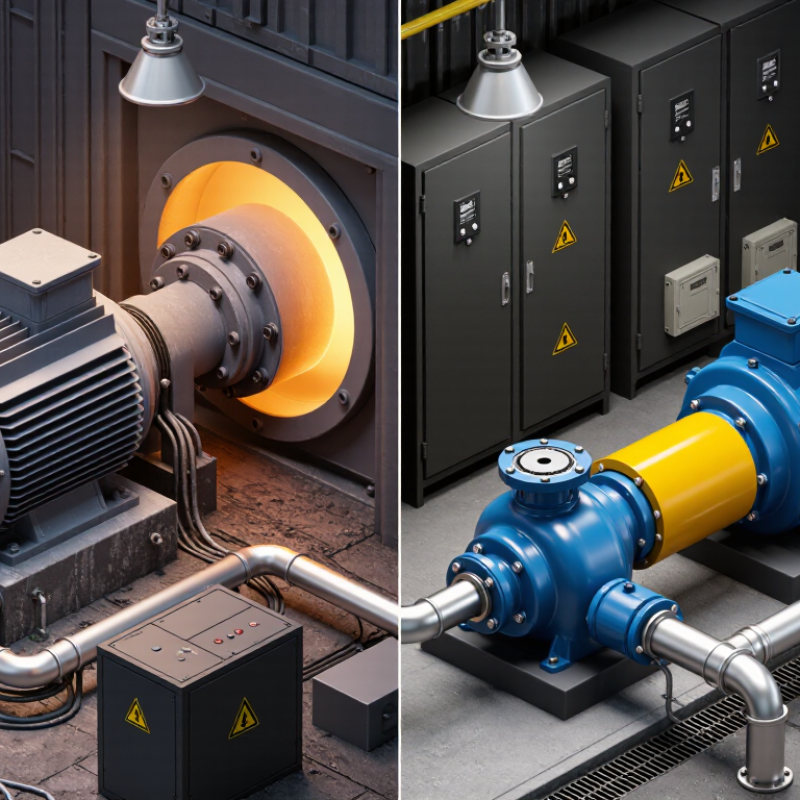
How to Choose the Right Synchronous Motor?
A synchronous motor runs at a fixed speed, matching the rotating magnetic field. Its speed follows Ns = 120f/p, where frequency and pole count determine operation. Unlike an induction motor, it has almost no slip during stable loading. This precision suits compressors, pumps, conveyors, and high-speed machinery. The International Energy Agency reports that electric motor systems consume roughly half of global electricity. Small efficiency gains can therefore matter significantly.
Motor operating principles should guide the selection. Wound-field motors allow adjustable excitation and can correct poor power factor. Permanent-magnet synchronous motors offer high efficiency and compact size, but magnets increase cost and temperature concerns. Synchronous reluctance motors avoid permanent magnets and can provide strong efficiency, though their control system may be more demanding. The U.S. Department of Energy estimates that motor-driven equipment uses about 69% of industrial electricity in the United States, according to its Motor Systems Market Assessment.
Start with the load profile, not the nameplate alone. Check starting torque, acceleration time, speed variation, duty cycle, ambient temperature, and inverter compatibility. A motor that looks efficient at full load may perform poorly under frequent low-load operation. That is easy to overlook. Harmonic distortion, cooling limits, and maintenance skills also affect the real result. A spreadsheet cannot replace measured load data. In practice, incomplete measurements remain one of the most common selection weaknesses.
| Category | Selection Dimension | Technical Data or Operating Principle | How It Influences Motor Selection |
|---|---|---|---|
| Operating Principle | Synchronous speed |
The rotor rotates at the same average speed as the rotating magnetic field after synchronism is established.
Ns = 120f / P Ns = synchronous speed in rpm, f = supply frequency in hertz, and P = number of poles. |
Select the pole count and supply frequency according to the required shaft speed. A synchronous motor does not operate with the normal steady-state slip of an induction motor. |
| Operating Principle | Speed examples |
At 50 Hz: 2 poles = 3,000 rpm; 4 poles = 1,500 rpm; 6 poles = 1,000 rpm; 8 poles = 750 rpm.
At 60 Hz: 2 poles = 3,600 rpm; 4 poles = 1,800 rpm; 6 poles = 1,200 rpm; 8 poles = 900 rpm. |
Choose a variable-frequency drive when the application requires speed adjustment rather than one fixed synchronous speed. |
| Operating Principle | Torque production | The stator creates a rotating magnetic field. The rotor magnetic field locks to this field and produces torque through the angular displacement, commonly called the torque angle. | Confirm that the motor has sufficient pull-in, pull-out, and accelerating torque for the load. Sudden overloads can cause loss of synchronism. |
| Motor Type | Wound-field synchronous motor | The rotor uses a DC field winding. The excitation current can be adjusted to control the rotor magnetic field and reactive-power exchange. | Suitable for large constant-speed drives, high-power industrial equipment, and applications where power-factor correction is valuable. It requires an excitation system and additional control equipment. |
| Motor Type | Permanent-magnet synchronous motor | Permanent magnets provide the rotor flux, eliminating rotor copper excitation losses. The motor normally operates from an inverter for starting and speed control. | A strong choice for high efficiency, compact size, high power density, and variable-speed operation. Consider magnet temperature limits, demagnetization risk, and drive compatibility. |
| Motor Type | Synchronous reluctance motor | The rotor produces torque from magnetic reluctance differences between its preferred and non-preferred flux paths. It has no rotor windings or permanent magnets. | Suitable for efficient variable-speed industrial systems when reduced rotor losses, rugged construction, and avoidance of permanent magnets are priorities. It generally requires an inverter. |
| Motor Type | Hysteresis synchronous motor | The rotor uses a magnetically hard material and reaches synchronous speed through hysteresis torque. It provides smooth, quiet operation at relatively low power ratings. | Consider it for timing mechanisms, instrumentation, audio equipment, and other low-power applications where quiet operation and constant speed are more important than high output torque. |
| Starting | Starting capability | A conventional synchronous motor is not inherently self-starting from a fixed-frequency supply because the average starting torque is zero when the rotor is stationary. | Provide a damper winding, an auxiliary starting motor, or a variable-frequency drive. Permanent-magnet and synchronous-reluctance motors commonly use inverter-based starting. |
| Power Quality | Power factor | A wound-field synchronous motor can operate at lagging, unity, or leading power factor by changing its excitation. Permanent-magnet motors commonly operate near unity power factor, depending on design and load. | Choose adjustable excitation when the motor must also improve plant power factor. Check the complete operating range because power factor changes with load, excitation, and control settings. |
| Efficiency | Losses and efficiency | Synchronous motors eliminate steady-state slip losses. Permanent-magnet motors also remove rotor copper losses, while synchronous-reluctance motors avoid both rotor copper losses and permanent-magnet material. | Compare efficiency at the actual duty point, not only at rated load. For variable-speed systems, evaluate efficiency across the complete speed and torque profile. |
| Load Suitability | Load torque characteristics | Synchronous motors are well suited to constant-speed loads such as compressors, pumps, fans, conveyors, and large process machines. The load must remain within the motor’s pull-out torque capability. | For high-inertia or rapidly changing loads, verify acceleration time, inertial matching, transient torque, and the drive’s ability to maintain synchronism. |
| Control | Drive and feedback requirements | Inverter-fed synchronous motors may use rotor-position feedback, sensorless estimation, or an encoder depending on speed range, starting torque, and control accuracy. | Use position feedback when low-speed torque, rapid response, or precise positioning is required. Confirm compatibility among the motor, inverter, feedback device, and control software. |
| Environment | Thermal and mechanical conditions | Motor selection depends on ambient temperature, altitude, enclosure, cooling method, duty cycle, vibration, humidity, and hazardous-area requirements. | Check the required protection rating, insulation system, cooling arrangement, service factor, bearing design, and permissible temperature rise before finalizing the motor. |
| Sizing | Rated power and torque |
Mechanical output power is related to torque and speed by:
P = T × ω where P is mechanical power in watts, T is torque in newton-metres, and ω is angular speed in radians per second. |
Select the motor from continuous torque, peak torque, overload duration, speed range, acceleration requirements, and duty cycle—not from horsepower or kilowatts alone. |
| Final Choice | Recommended decision sequence |
1. Define speed and torque requirements. 2. Identify the supply and control method. 3. Select the rotor technology. 4. Check starting and overload performance. 5. Verify efficiency, power factor, cooling, environment, and maintenance needs. |
Select a wound-field motor for adjustable excitation and large fixed-speed loads; a permanent-magnet motor for high efficiency and power density; or a synchronous-reluctance motor when robust, magnet-free construction is preferred. |
Choose a salient-pole rotor for lower speeds and useful starting torque. Its projecting poles also simplify inspection. Choose a cylindrical rotor for high-speed operation because its smooth surface reduces mechanical stress. Speed matters most.
Check voltage, frequency, starting equipment, ambient temperature, floor space, and shaft load. A dusty workshop may need stronger enclosure protection. A hot room can shorten insulation life. Measure the real load carefully.
Wound-field excitation allows adjustable excitation and power-factor correction. However, brushes and slip rings require regular inspection. Dust around contact parts may increase maintenance. Keep that risk visible.
Brushless excitation reduces contact wear and may lower routine maintenance. Troubleshooting can become more complicated, however. Technicians need suitable testing equipment and clear service procedures. Simpler is not always easier.
Permanent-magnet rotors provide high efficiency and compact construction. Review demagnetization risks, nearby heat, and future replacement costs. I once underestimated heat near a motor enclosure. That changed my testing routine.
A variable-frequency drive supports controlled acceleration and limits starting current. Vector control improves torque response during rapid load changes. Sensorless control reduces hardware, but low-speed accuracy may vary. An encoder gives precise feedback, though wiring needs care.
Record vibration, winding temperature, current, synchronizing time, and power factor. Compare readings with the technical documentation. Site conditions may disagree slightly. Measured evidence matters.
Include purchase, installation, controls, energy use, spare parts, inspections, and downtime. A lower purchase price may lead to repeated shutdowns. Review the actual duty cycle. Calculated savings may disappear under light loading.
Choosing the right Synchronous Motor begins with understanding how it operates and which motor type best matches the application. Evaluate the required load, operating speed, starting torque, continuous torque, power rating, and duty cycle to ensure reliable performance. The selected rotor design, excitation method, and control system should support the required precision, stability, and speed regulation. Consider whether permanent-magnet, electrically excited, or another synchronous configuration is most suitable for the intended operating conditions.
Efficiency and starting performance are also important factors. Review acceleration requirements, overload capability, braking functions, variable-speed control, noise, and heat management before making a decision. Installation space, ambient temperature, dust or moisture exposure, ventilation, maintenance access, and service expectations should be checked carefully. Finally, compare purchase price, control equipment, energy consumption, maintenance, and expected service life to determine the total cost of ownership. A balanced assessment of technical requirements and long-term operating conditions will help ensure the motor delivers dependable and efficient performance.